


Solution anneals, partial anneals and more
EBNER Industrieofenbau | Markus Gangl, Senior Product Manager Aluminum
Solution anneals, partial anneals and more
How furnace technology affects aluminum’s material properties.
Aluminum offers more than just light weight and corrosion resistance: its true strength lies in the fact that specific aspects of its material properties can be directly influenced. Precision heat treatment processes like solution annealing, partial annealing and aging provide the material with the strength, ductility and surface finish characteristics crucial for high-end applications, for example those in the automotive or aerospace industries.
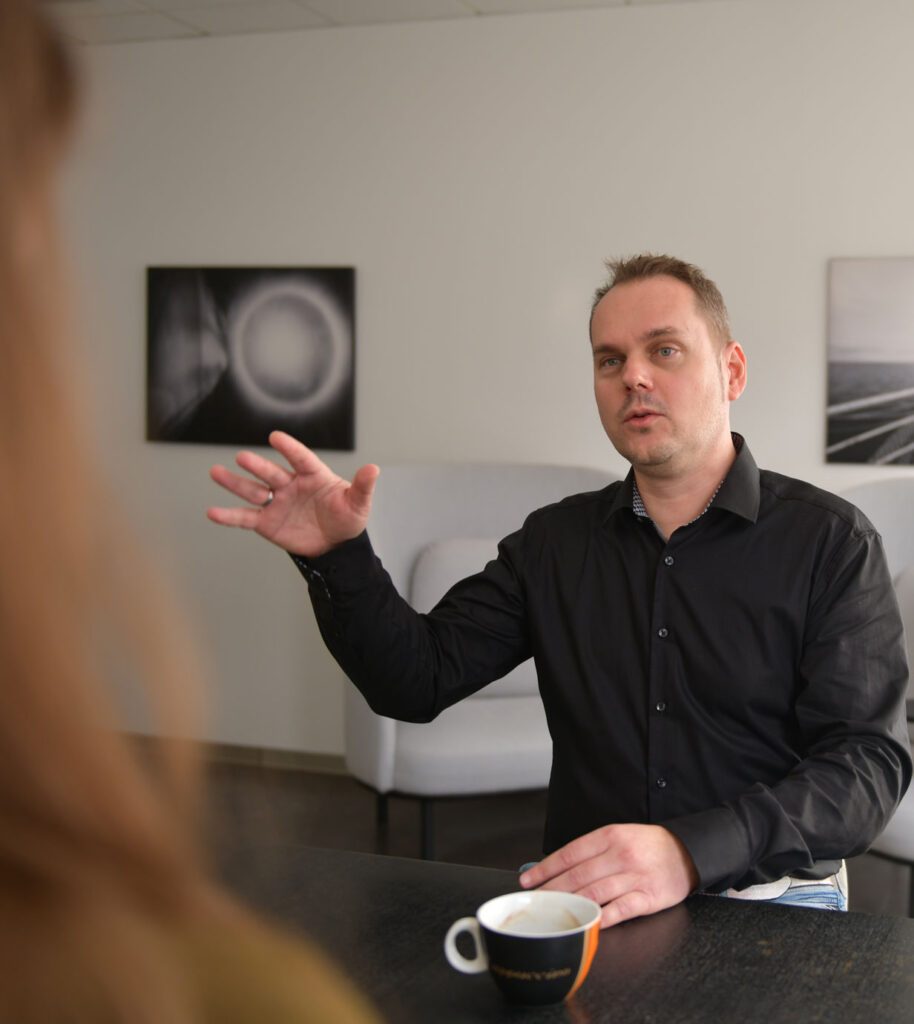
In this interview, Markus Gangl, Senior Product Manager Aluminum, explains how EBNER Industrieofenbau uses state-of-the-art furnace technologies to accurately control these processes, which processes are used for which alloys and why the right combination of temperature control, atmosphere flow design and quenching technology makes the difference between run-of-the-mill and peak performance.
Solution heat treatment is one of the key processes used in the aluminum industry. During the process, what exactly is happening within the material?
Solution heat treatment is one of the central steps that are taken to create desired material properties in aluminum alloys. The process is only suitable for hardenable alloys like the 2xxx series (AlCuMg), 6xxx series (AlMgSi) and 7xxx series (AlZnMg(Cu)).
During the heating-up phase, the alloying elements in the aluminum crystal fully dissolve at temperatures between around 450 °C and 550 °C, depending on the alloy. Heating is immediately followed by rapid cooling, which prevents precipitation. This means that the alloying elements remain evenly distributed throughout the crystal lattice.
In a subsequent heat treatment step – artificial aging or just aging – at a temperature ranging from around 100 °C to 230 °C, the strength of a component is raised to the desired level. This interaction of solution annealing, quenching, and aging is essential for the mechanical properties and overall performance of the final products.
Which alloys (2xxx, 6xxx, 7xxx) is this process important for, and why?
The hardenable aluminum alloys from the 2xxx, 6xxx and 7xxx series are primarily used in the automotive and aerospace industries – any place where components bearing loads or affecting crash characteristics have to fulfill extremely high requirements for strength and durability. To ensure that these components retain their mechanical properties under fluctuating loads and over the long term, precisely-controlled solution heat treatment is indispensable. It ensures that desired material characteristics remain stable over the entire life cycle of a component.
Partial annealing is a common intermediate step. What effects can be achieved with this step?
A partial anneal before or after other heat treatment or manufacturing processes, for example a soft anneal, allows formability to be improved. This both simplifies and improves downstream manufacturing processes like pressing or deep drawing.
Floater furnaces and roller-hearth furnaces are designed to process strip and plate, respectively. What are the particular advantages offered by each of these technologies?
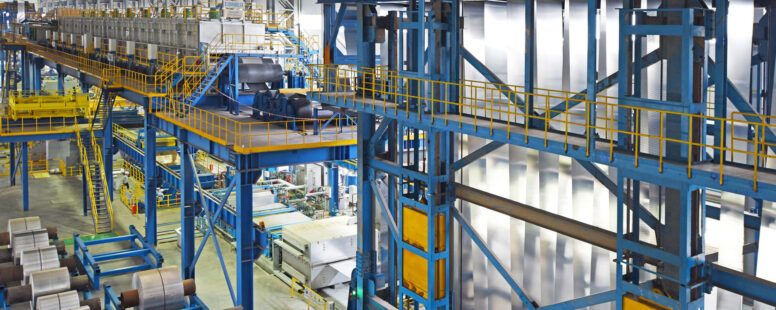
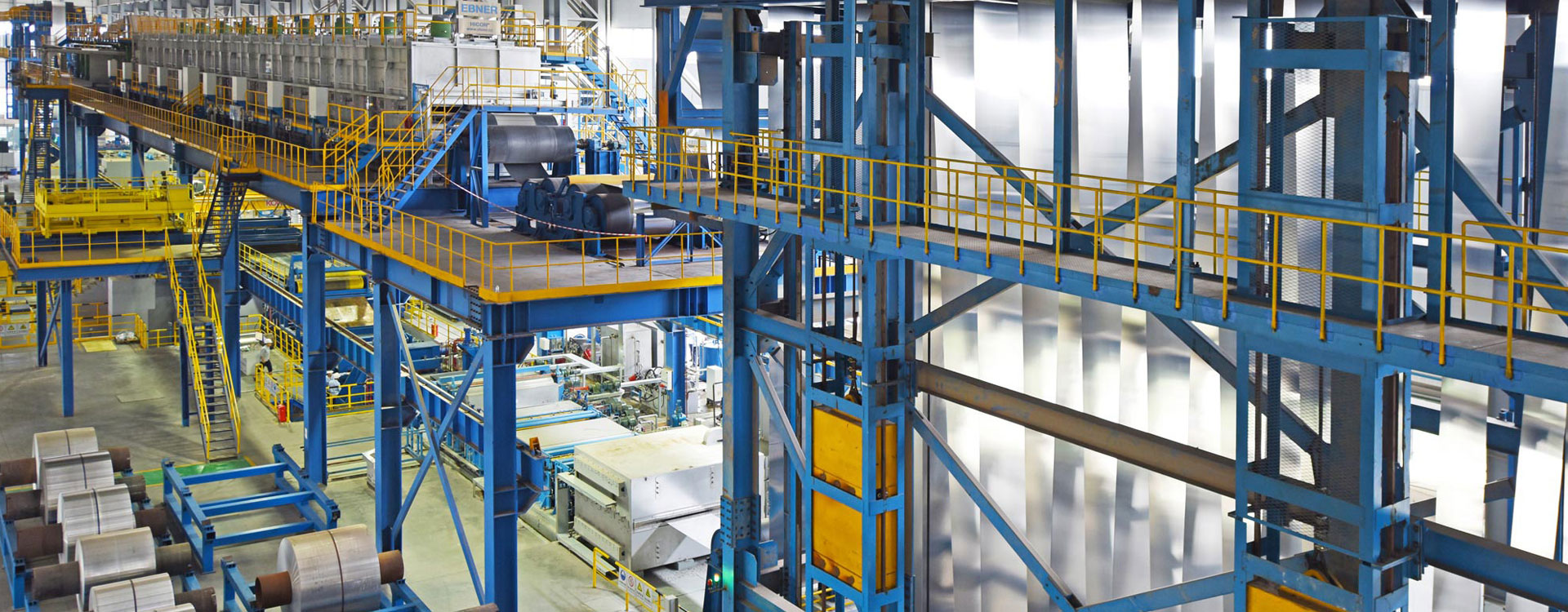
At a floater furnace facility for aluminum strip, the special nozzle arrays in the furnace and quench allow the strip to be transported through the entire heat treatment facility without contacting any components. This prevents any kind of damage to the strip surface, and the optimized nozzles also ensure an excellent transfer of heat to the material. The integrated SMARTQUENCH® combines air and water quenching, offering the greatest possible degree of flexibility in cooling rates. Strip deformation is held to a minimum during cooling, even as technologically critical cooling rates are achieved.
In the roller hearth furnace, different roll designs have proven to be the best concept in each section — from plate loading, through the furnace zones, and all the way to the high‑ and low‑pressure quench — in order to prevent any surface damage. Here as well, specialised nozzle geometries and precise controllability in both the furnace and the cooling section are essential for an accurate and reproducible heat‑treatment process.
EBNER offers bell annealers for some very specialized applications. Which particular products are they intended for? And in contrast, what is an overhead furnace suitable for?
Bell annealers for aluminum are used to manufacture high-capacitance foil for the electronics industry. Whether or not the furnace atmosphere is absolutely pure is a crucial factor in processing, with purity ensured by using argon as the process atmosphere. This is the only way to create an even and accurately defined layer of aluminum oxide (Al2O3) on the surface of the foil, a central requirement for products with high electrical conductivity and high reliability. These high-quality aluminum foils are then used in capacitors, batteries, LED lamps, and for other applications in the electronics industry.
In contrast, an overhead furnace is a flexible solution that can carry out a variety of heat treatment processes on aluminum coils. The individual furnace chambers can operate independently of one another, even with an N2 atmosphere, and in addition to recrystallization and partial anneals the furnace can also be used for aging.
From aluminum foil to aircraft frames, precise heat treatment is the key to consistently high quality. With innovative furnace designs like the floater furnace, roller-hearth furnace, bell annealer and overhead furnace, EBNER can offer a solution suited to any application. Using optimal temperature control, state-of-the-art nozzle and atmosphere flow technology and flexible process control systems, we create heat treatment facilities that unite extremely high efficiency with perfect surface finishes.