


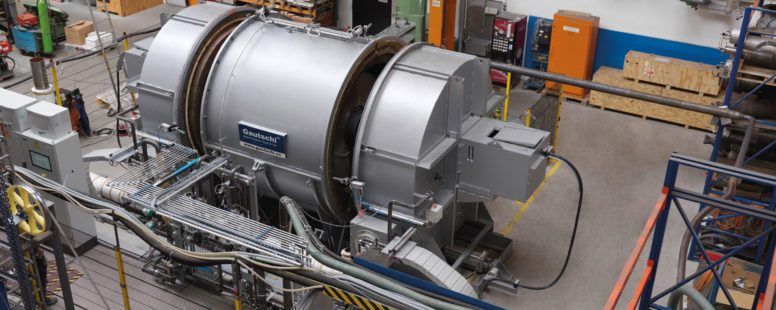
Compact Coil Furnace (CCF)
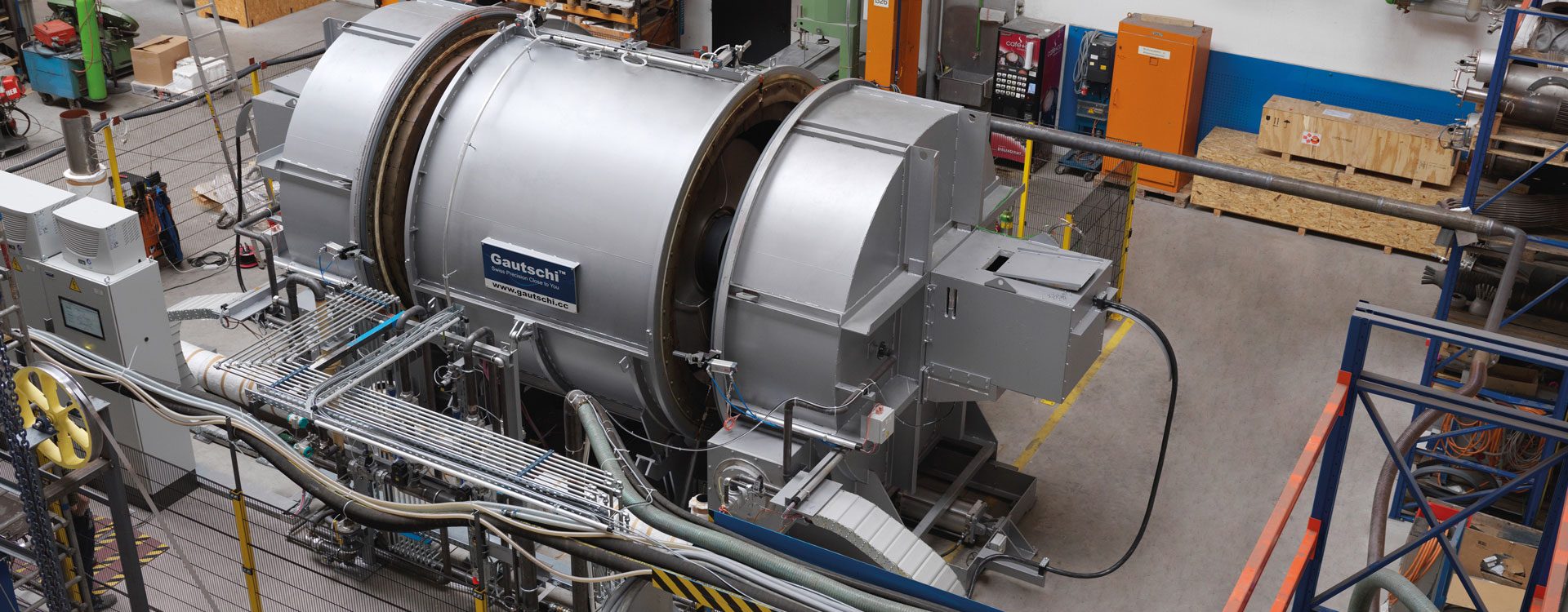
Gautschi | Marcus Schlager, Research and Development
Compact Coil Furnace (CCF)
Combining state-of-the-art technology with high efficiency.
To improve the economic and ecological performance of industrial heat treatment processes, there is an increasing focus on energy-optimized plant concepts. The Compact Coil Furnace (CCF) combines modern technology with high efficiency and sets new standards in the heat treatment of individual coils.
FURNACE DESIGN AND PLANT LAYOUT
The Compact Coil Furnace (CCF) consists of a cylindrical central section and two detachable end sections located at the sides of the unit. The central section serves as the actual furnace chamber and accommodates the coil during heat treatment. It is equipped with two upward opening door wings to load and unload the coil.
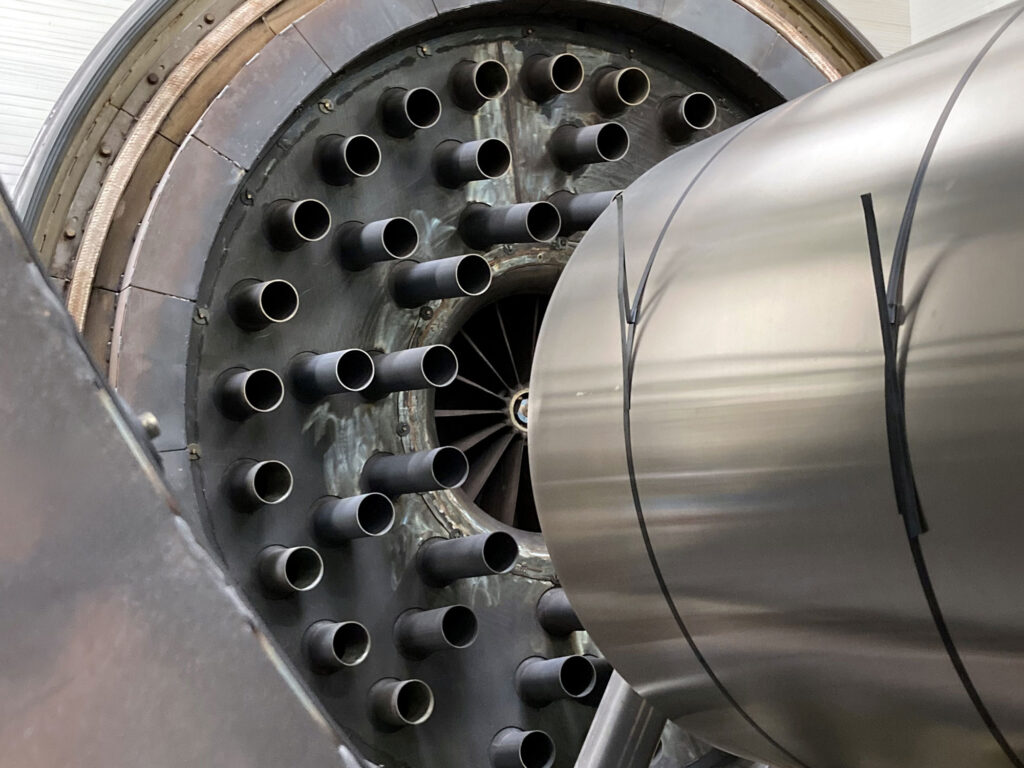
The two end sections contain the recirculation fans, their drive motors, and the complete heating system. Each end section is fitted with individual temperature control, allowing precise control of process temperature and optimal adjustment to varying material requirements. The CCF can be heated either by gas-fired radiant tubes or fully electric. For electric operation, robust and modular stainless steel heating elements are used.
The entire system requires only a small footprint, making it easy to integrate into existing production lines. The control cabinets and the gas train are arranged outside the furnace in a space-saving manner to ensure good accessibility for service and maintenance.
HEAT TREATMENT IN THE COMPACT COIL FURNACE
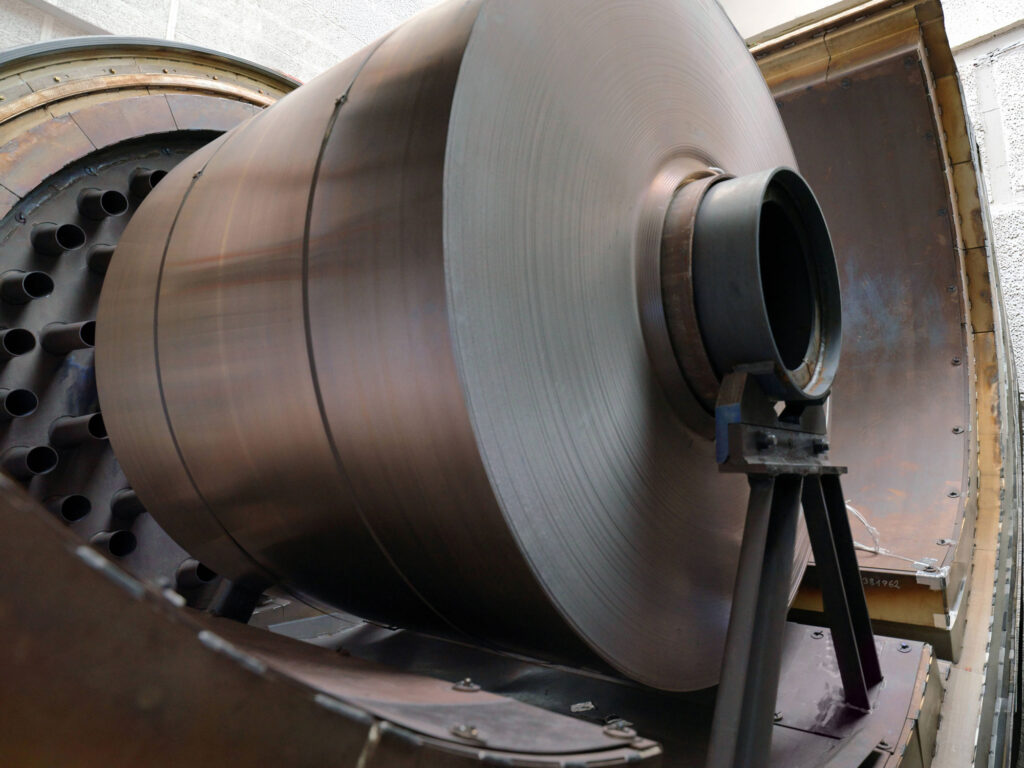
To initiate the process, the coil is lowered into the CCF’s central section from above. Loading and unloading can be carried out entirely using the customer’s existing coil handling system. Either coil grippers or C-hooks can be used without additional modifications to allow for seamless integration of the CCF into existing material flow concepts.
After loading, the two door wings of the central section close, the end sections are pneumatically moved toward the furnace center, and the unit locks automatically. All relevant components are equipped with double thermal and gas tight seals. Depending on the coil material, process requirements, and the desired surface quality, heat treatment in the CCF can be performed either under protective gas or in air.
During the heat treatment process, the furnace atmosphere is heated and continuously circulated between the heating system and the furnace chamber. A specially developed circular nozzle system distributes the hot atmosphere evenly onto the coil’s end faces. This optimized flow design ensures highly efficient heat transfer and uniform temperature across the entire cross section of the coil. To shorten overall process times, the CCF can be equipped with a water-cooling circuit that enables accelerated and controlled cooling of the coil
after heat treatment.
EFFICIENT DESIGN FOR COST REDUCTION
The CCF’s cylindrical furnace chamber closely conforms to the cylindrical shape of the coil. This geometric adaptation minimizes both the external surface area and the total volume of the furnace. Compared to conventional singl-coill furnaces, this results in the following economic advantages:
- SIGNIFICANTLY LOWER HEAT LOSSES: The reduced surface area decreases heat losses during holding operation by up to 75%. This substantially lowers energy consumption, especially during longer holding periods.
- REDUCED PROTECTIVE GAS CONSUMPTION: The minimized furnace volume lowers protective gas demand by around 55%.
- ADDITIONAL ENERGY SAVINGS DUE TO LOWER PROTECTIVE GAS CONSUMPTION: Since less protective gas is required, less heating energy is required – providing another direct contribution to reduced operating costs.
If desired, the CCF can be operated as fully electric system. When paired with sustainable electricity, the heat treatment process in the CCF can be carried out with zero CO₂ emissions. This not only reduces operational emissions but also significantly lowers the cost of CO₂ certificates.
The savings depend on the number of heat treatment cycles, the specific tempera-ture profile, and the selected operating mode. In many applications, however, the CCF’s efficient design proves to make a significant contribution to reducing overall operating costs.
CONCLUSION
The Compact Coil Furnace (CCF) offers a future oriented solution for energy-efficient heat treatment of individual coils. Its compact design significantly reduces both energy and protective gas consumption. This results not only in lower resource usage but also substantial cost savings during furnace operation.
Thanks to the flexible heating options – either gas fired or fully electric – the CCF can be optimally adapted to different production requirements. Operations aiming to make heat treatment processes more efficient, reduce operating costs, and improve their CO₂ footprint particularly benefit from the innovative concept.
The CCF is thus ideally suited for operations that require high process flexibility and value modern, energyoptimized technologies. With its innovative design and economic advantages, the Compact Coil Furnace sets new standards in the heat treatment of individual coils.