


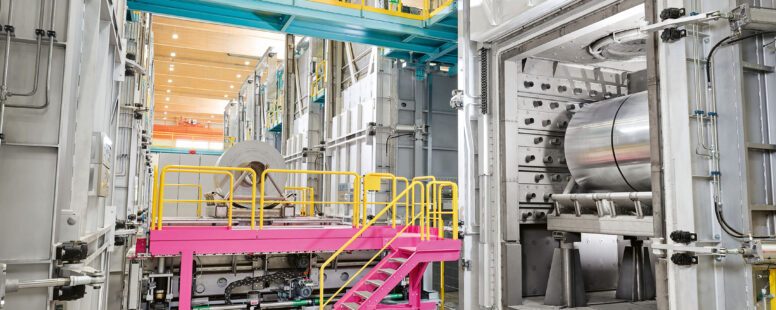
Electrification as the Key to Decarbonization
EBNER | MICHAEL SCHIESSER, EVP Customer & Sites Services
Electrification as the Key to Decarbonization
EBNER and AMAG set new standards for the decarbonization of the Aluminum Industry
The aluminum industry worldwide faces the challenge of making its production processes more sustainable and climate-friendly. A key lever in this transformation is the decarbonization of energy intensive heat treatment processes. Together with AMAG Austria Metall AG in Ranshofen, EBNER is actively driving this change and demonstrating how existing heat treatment facilities can be prepared for a low-carbon future.
CLIMATE NEUTRALITY AS A LONG-TERM GOAL
As part of its long-term decarbonization strategy, AMAG aims to achieve climate-neutral operations at its Ranshofen site by 2050. The focus is on the efficient use of recycled materials, the continuous improvement of energy efficiency, and the gradual replacement of fossil fuels with renewable alternatives. Thanks to its high recycling rate and the use of renewable electricity, the site is already among the most CO2-efficient aluminum production facilities in Europe.
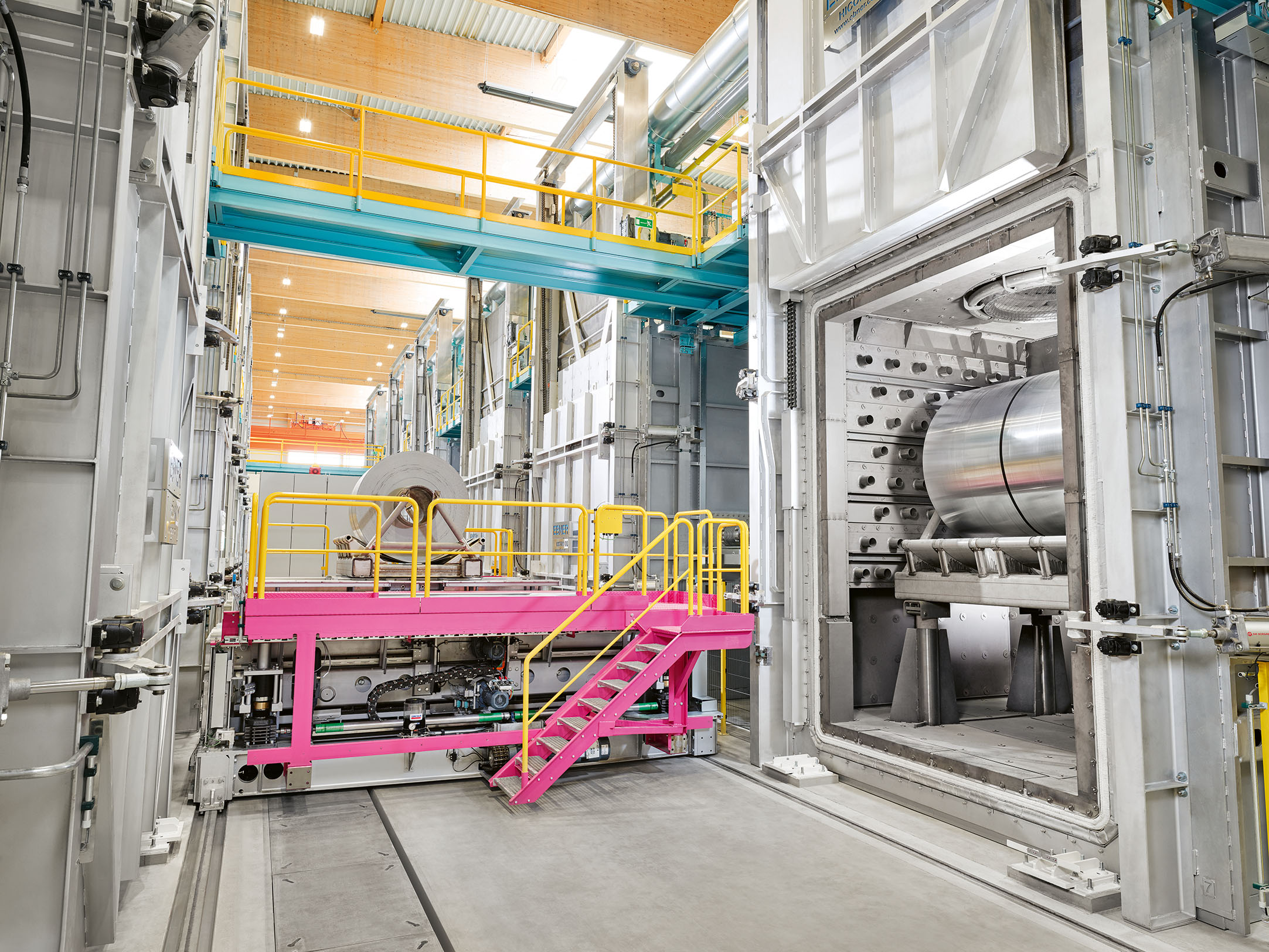
Against this backdrop, EBNER was commissioned in 2021 to conduct comprehensive feasibility studies on the decarbonization of existing heat treatment equipment. The objective was to evaluate various heating technologies in terms of technical feasibility, economic viability, energy efficiency, and CO2 reduction potential. Based on these studies, the decision was made to convert two existing gas-fired batch annealing furnaces at AMAG’s rolling mill to electric heating.
TWO HEATING CONCEPTS TESTED IN PRACTICE
The technical challenge was to integrate the new heating systems into the existing furnace infrastructure without altering the proven process conditions. To achieve this, two different electric heating concepts were installed and tested under real production conditions: a tubular heating system and EBNER’s proprietary plate heating system.
Following successful installation and commissioning, extensive temperature uniformity surveys were conducted to verify the thermal performance of the electric heating systems. The results confirmed the high expectations: both heating concepts achieved excellent temperature uniformity and met the stringent requirements of AMS 2750 and AMS 2772 aerospace standards. At the same time, electric heating enabled faster heating rates and significantly more precise temperature control, ensuring that the consistently high product quality was fully maintained.
UP TO 29 PERCENT LOWER ENERGY CONSUMPTION
The efficiency and sustainability gains achieved are particularly remarkable. Compared to the previous natural gas-fired operation, the electric heating systems reduce energy consumption by an average of 26 to 29 percent. In addition, each furnace can save approximately 100 metric tons of CO2 emissions annually. Even more significant, however, is the long-term potential: the knowledge gained through this project provides the foundation for future electrification initiatives that could reduce CO2 emissions by up to 45,000 metric tons per year. This would correspond to approximately 40 to 50 percent of the site’s Scope 1 emissions (as of 2024) in Ranshofen.
A PRACTICAL SOLUTION FOR EXISTING FACILITIES
The conversion serves as an excellent example of how existing industrial facilities can be successfully modernized through innovative technologies. EBNER’s proprietary plate heating system offers a decisive advantage: in many cases, it can be integrated into existing equipment with relatively limited modifications, providing customers with a practical pathway to decarbonize their production processes.
At the same time, AMAG consciously pursues a technology-neutral approach. In addition to electrification, alternative energy sources such as hydrogen are also being evaluated. Through targeted pilot projects, a solid knowledge base is being established that enables a gradual and economically viable transformation of production processes without compromising ongoing operations or the high quality of the final products.
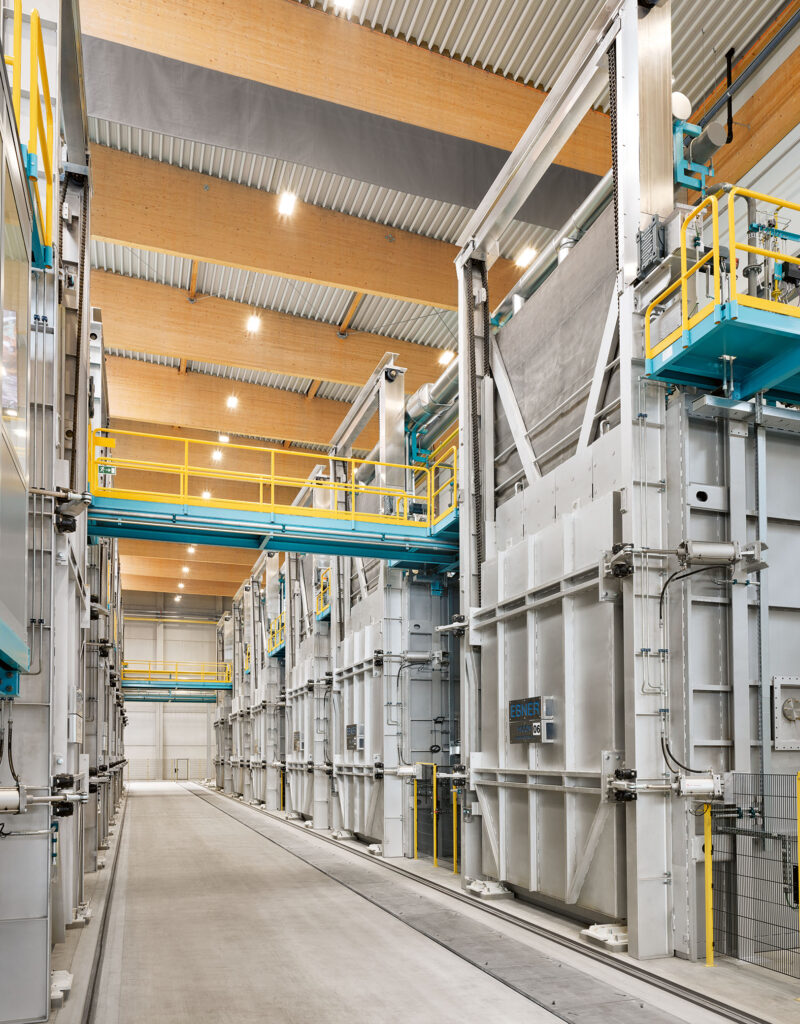
TECHNOLOGY FOR A MORE CLIMATE-FRIENDLY INDUSTRY
The joint project between EBNER and AMAG clearly demonstrates that decarbonization, industrial efficiency, and the highest quality standards do not have to be mutually exclusive. On the contrary, the successful conversion of the heat treatment furnaces illustrates how innovative technologies can already make a tangible contribution to creating a more sustainable industry. Through projects such as this, EBNER is making an important contribution to the transformation of energy-intensive production processes and supporting its customers on their journey toward a more climate-friendly future.