


When Physics Becomes Intelligent Furnace Models
Employee Interview - Richard Speletz
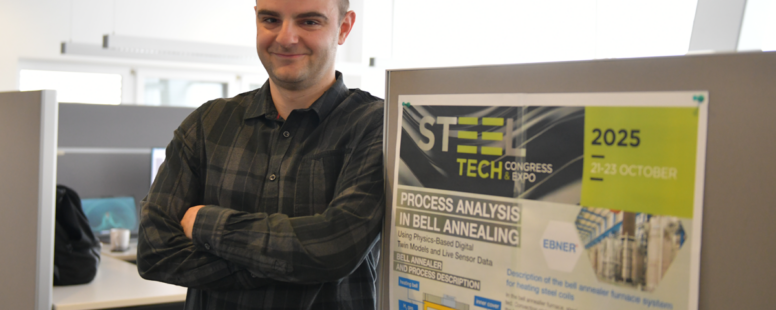
When Physics Becomes Intelligent Furnace Models: Interview with Richard Speletz
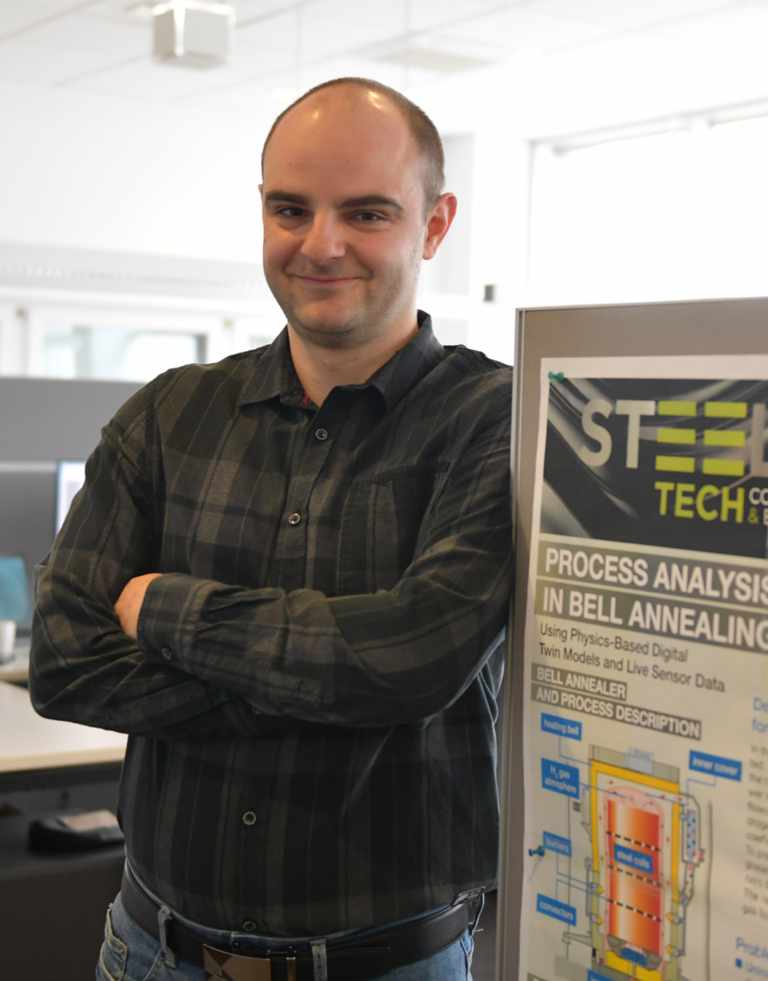
Richard Speletz
Senior Manager Model Development
I started my career at EBNER in the Innovation Mechatronics department as a model developer. One of my first tasks was the verification of a finger nozzle for aluminum furnaces, where simulations were compared with real measurement data.
After that, I was part of a development project in which I also took on the role of project lead. Together with a research institute, we developed a model predictive control system for the floating strip furnace, a modern control strategy that can proactively calculate optimal settings.
With the establishment of the Digitalization department, I moved into the area of model development and actively supported the development of this new department. During this time, I worked intensively on a new mathematical model for the bell annealer.
Today, as team leader of the Model Development department, I work with my team on translating physical relationships into intelligent models that make our plants more efficient and smarter.
7 Questions | 7 Answers
Describe your job in one sentence.
I translate complex physical processes into models that make our industrial furnaces more efficient, smarter, and more predictive.
What do you look forward to when you go to work in the morning?
What I look forward to most is seeing my colleagues, having technical discussions with them, developing new ideas, and solving problems together. And when your own work is then confirmed through practical tests, you can go home with a really good feeling.
What was your most interesting work experience at EBNER?
My most interesting work experience at EBNER was a three-week commissioning of a floating strip furnace in Fuqing, China.
You travel halfway around the world and suddenly find yourself standing in front of an industrial furnace that is almost 100 meters long and installed at a height of five meters – a furnace that, until then, you had only known from pictures, plans, and calculations. On site, I was able to support measurements, the data from which I later used directly in my models. You quickly realize that, in practice, there are challenges you would never think of in the office.
In addition to the technical experience, the environment itself was also very memorable: in a “small town” with 1.5 million inhabitants, you are a bit of an attraction yourself as a European. Ordering food only really worked with pictures, communication with locals took place through our Chinese colleague or translation apps, and taxi rides were always a small adventure due to the chaotic traffic.
This trip helped me grow enormously, both professionally and personally.
Everyone needs inspiration and motivation in their daily work. What drives you?
I am fascinated by taking physical processes that are described by complex equations, translating them into code, and thereby creating the opportunity to better understand them through simulations. I also enjoy presenting the results and preparing the knowledge gained in a way that makes it applicable for others. When our models eventually run directly on the plants and you can see a real improvement, that is the greatest motivation for me.
What does your typical working day at EBNER look like?
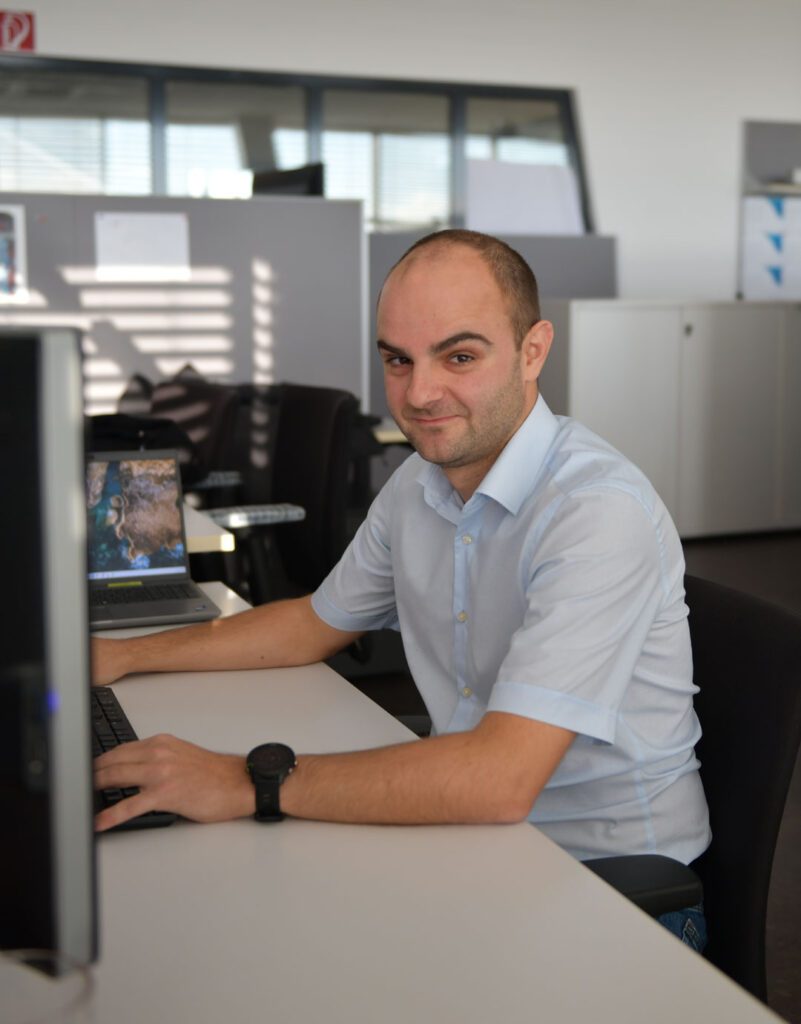
My working day is a mix of programming, technical exchange, and practical testing.
As a model developer, I translate the physical relationships of our furnaces into formulas and code. These days, AI also supports me in this process, making programming significantly more efficient.
In my role as team leader, I discuss progress, results, and open questions with my team on a daily basis. In addition to technical topics, I also provide organizational support so that everyone can work effectively.
At lunchtime, I usually go to the canteen with colleagues from previous departments – exchanging thoughts on projects, sports, or personal topics is just as much a part of the day as the work itself.
In the afternoon, calculations are often verified in the technical center. The measurement data obtained there is visualized and used directly to further improve our models.
In between, I support colleagues from other departments with data evaluations or designs. And for a coffee break, we meet in the TOGETHER zones, where there is room for technical discussions as well as personal conversations.
What benefits do you appreciate most at EBNER?
What I value most at EBNER is the strong team spirit among colleagues – not only at work, but also privately, for example, during joint skiing trips or visits to NFL games.
I also really appreciate the two days of home office per week, because they save commuting time and provide more free time.
The in-house canteen, where meals are still freshly prepared, is another major plus.
Company events such as the beach volleyball tournament are not only a lot of fun but also a great opportunity to get to know colleagues from a different perspective.
What advice/tip would you give to someone who wants to apply for a job at EBNER?
Be open and curious. Use every opportunity to learn something new – whether through projects, commissioning assignments, or exchanging ideas with colleagues. Anyone who gets involved and actively experiences the company culture will soon realize just how much fun and team spirit there is in this company.