


The Autonomous Casthouse
Gautschi | STEFAN PELECH, Managing Director
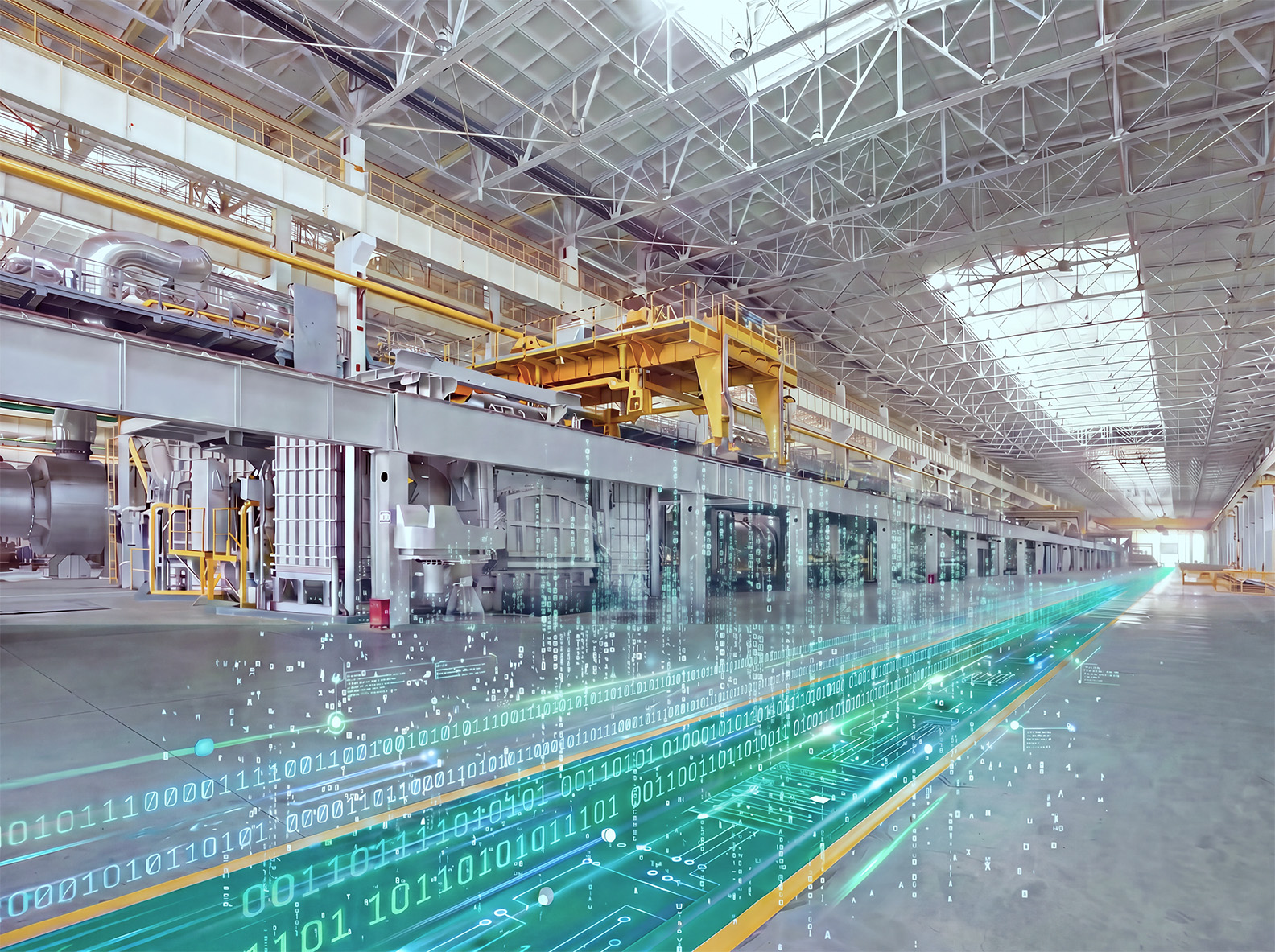
Image is AI-modified
The Autonomous Casthouse
Redefining Safety, Efficiency, and Performance in Aluminum Casting
The EBNER Group companies GNA, Gautschi, and HPI combine extensive hands-on experience with deep metallurgical expertise to deliver fully integrated solutions for Aluminum casthouse operations. As full-solution providers of casthouse equipment, they have jointly developed a comprehensive automation concept that seamlessly connects all processes and equipment across the Aluminum casthouse.
Supported by EBNER Group Digital Solutions, this approach leverages state-of-the-art and leading-edge programming techniques to enable intelligent, automated operations. The result is a smarter casthouse environment that enhances safety, increases operational efficiency, and supports compliance with the highest environmental standards.
This article presents the concept, its architectural foundation, nine modular use cases that can be deployed individually or as part of an integrated roadmap, and a pragmatic pathway for adoption in greenfield, brownfield and existing installations.
BACKGROUND
The Aluminum casthouse is a place where extreme heat, hazardous materials and relentless production schedules converge. Yet for decades, the fundamental way casthouses operate has remained largely unchanged: experienced operators walk the production floor, make judgment calls based on intuition and habit, record data in disconnected systems, and respond to failures only after they occur.
This model is reaching its limits. Tightening safety regulations, rising energy costs, increasing alloy complexity, and a shrinking pool of experienced metallurgical talent are creating mounting pressure on casthouse operators worldwide. At the same time, the technologies needed to address these challenges, in particular industrial IoT, machine learning, digital twins, and intelligent automation, have matured to the point where deployment at scale is no longer aspirational. It is commercially viable, field-validated in initial deployments, and strategically necessary.
The Autonomous Casthouse is the response to this inflection point. It is a comprehensive, scalable vision for a casthouse that monitors itself, optimizes its own performance, and protects its people, not through human vigilance alone, but through intelligent systems that work continuously, consistently and without fatigue. Grounded in over a century of casthouse engineering expertise and built on the EBNER Group Digital Platform, the Autonomous Casthouse does not replace the human operator. It elevates that operator from a reactive firefighter to a strategic supervisor, supported by data, guided by intelligence, and freed from hazard.
FOUR CORE PRINCIPLES
Uncompromising
Safety Through
Automation
In Aluminum casthouses, personnel safety is the highest priority. Any contact between employees and molten Aluminum must be absolutely prevented. Whenever molten metal is transported in open vessels, such as pouring launders, molds, or tapping ladles, operators must be kept outside the hazardous zone.
The Autonomous Casthouse concept ensures that all critical process sequences are monitored remotely from secure operator control rooms. Human presence in dangerous zones is eliminated, while advanced automation and intelligent supervision maintain full process visibility and control. Plant logistics are reinforced by networked Autonomous Transport Vehicles (ATVs) integrated into the digital control architecture; laser scanners, protective fields, Blue Spot warning projections and camera-based motion detection stop vehicles whenever personnel enter the travel path.
Error Prevention
for Higher
Productivity and
Consistent Quality
The productivity of a casting facility and the quality of its output depend heavily on consistent execution across shifts and personnel. The Autonomous Casthouse reduces human error by automating routine tasks and standard decisions while providing smart support for operational judgment.
Through continuous monitoring and intelligent rule sets, the system detects potential deviations early or prevents them entirely. Automation preevaluates decisions, monitors process boundaries, and handles repetitive interventions, freeing operators to focus on judgment intensive tasks where human expertise creates the greatest value.
Documentation,
Transparency,
and Process
Improvement
Modern casting installations are equipped with a multitude of sensors and actuators. These process signals are recorded, structured, and used to display key operational metrics such as energy and media consumption.
In the Autonomous Casthouse, this data actively drives improvement. Advanced analytical functions evaluate historical and real-time information to generate actionable recommendations for process improvements. The system either suggests parameter changes or autonomously adapts process parameters to optimize performance, increase stability, and continuously improve overall casthouse efficiency. The result is a closed loop from sensor to action, where every cast improves the next.
Maintenance
and Asset Protection
through Intelligent
Insights
Proper maintenance is essential to reducing operating costs, maximizing output, and ensuring long‑term equipment reliability. The same process data used for optimization also feeds predictive maintenance strategies.
Intelligent algorithms continuously analyze the condition of critical components, such as fans, pumps or drives, identify early signs of wear, and trigger condition-based inspections or automatically generate maintenance work orders. During maintenance execution, supportive remote applications accessible via VR headsets or mobile devices, bring expert guidance directly to the field technician‘s point of view. Integrated spare-parts management closes the loop by reducing the risk of production stoppages caused by missing parts.
THE DIGITAL FOUNDATION: A SCALABLE ARCHITECTURE
To realize the Autonomous Casthouse as a multiple application architecture, the digital foundation is provided by the proven EBNER Group Digital Platform, a scalable solution architecture built on decades of metallurgical expertise and cutting-edge technologies including machine learning, IoT connectivity, and Digital Twin simulation. Security is built in by design, and all process data and trained models remain the operator‘s property, never shared across customers.
The digital approach delivers tangible benefits across two key integration dimensions:
Horizontal Integration = Digitally Optimized Material Flow.
Seamless communication between production steps is enabled via industry-standard interfaces at the SCADA level (Level 2). This supports optimized material flow, integration with Manufacturing Execution Systems (MES, Level 3), and implementation of lean, data-driven workflows throughout the casthouse.
2. Vertical Integration = Digitally Optimized Equipment Performance.
Leveraging deep furnace and process expertise, vertical data flow from Level 1 (PLC) to Level 2 (SCADA) and upwards to MES (Level 3) or ERP (Level 4) via standardized APIs are ensured. This enables smart equipment capable of adapting to process variables such as alloy type, while meeting industry standards and improving energy efficiency.
The Core Digital Suite consisting of the HMI operator interface, process intelligence layer (VISUALFURNACES), traceability module (TRACKperfect) and maintenance module (MAINTAINperfect) is integrated in all GNA, Gautschi or HPI equipment. Both integration dimensions are designed to be open and vendor-neutral, allowing seamless integration of non-EBNER Group equipment.
„The Autonomous Casthouse does not replace the human operator. It elevates the job of the operator from a reactive firefighter to a strategic supervisor.“
MODULAR USE CASES IN PRACTICE
Each use case can be deployed stand-alone or as part of an integrated Autonomous Casthouse roadmap, enabling phased investment and quick wins. These use cases cluster naturally into three phases of the casting process.
1
PRE-CAST INTELLIGENCE
Input Planning.
Conventional charge planning focuses on scrap chemistry, but optimal charging is also driven by raw-material cost, energy input and achievable yield. A smart charge-planning module generates a ranked list of recommendations from real-time chemistry, current raw material costs, energy input parameters, and yield targets. The shift supervisor reviews the recommendations and confirms a data-driven decision within minutes, reducing raw material cost per ton and
improving first-cast quality.
Automation of the Charging Process.
Today, the decision when to reload a furnace is often a judgement call made by opening the door and visually assessing the melt. On a good day, this works. But timing errors, recharging too early or too late, create excess dross, waste energy, and reduce throughput, with measurable variation between day and night shifts. A camera system installed inside the furnace chamber continuously analyzes the melt state and combined with other process parameters like gas, power consumption and furnace temperatures the optimal recharge moment is automatically determined. The subjectivity is removed entirely. Dross formation is reduced, metal yield increases, performance becomes consistent regardless of who is operating the furnace.
Automatic Dosing of Alloying Components.
Manual alloying addition is a familiar scene: an operator approaches the furnace with bagged material, tosses it into the melt, and waits. The precision of this process depends entirely on the individual, their calculation accuracy, their consistency, and their proximity to the hazard zone. Overshooting is common. Repeatability is poor. Automated dosing systems use calibrated storage containers with precision discharge mechanisms to add Si, Mn, Cu, Fe, and other elements via the charging chute alongside loaded scrap. An electromagnetic stirrer at the furnace bottom ensures rapid dissolution and homogeneous distribution. In furnaces with an open side well, alloying materials can alternatively be added directly to the liquid metal, provided a drying or preheating system prevents moisture introduction. Alloy overshooting is reduced, composition consistency improves, and operators are no longer required near the melt for this task.
Fine-Tuning of alloy composition.
Magnesium is highly reactive at casting temperatures. Even a well-prepared melt can arrive at the holding furnace with Mg levels below specification due to oxidation losses during launder transfer. Such silent yield loss forces costly rework including additional alloying cycles. Magnesium-ingot submergence devices installed above the launder perform precise, automated Mg addition during transfer, compensating for oxidation losses in real time. Target composition is achieved in a single pass, eliminating correction loops and improving production efficiency from the very first cast.
Automation of the Dross Skimming Process.
Dross skimming is one of the most physically demanding and hazardous tasks in the casthouse. An operator is controlling a long-wearing skimming rake across the surface of the melt, working in intense heat, often with limited visibility through fume and glare. Mechanic impacts on furnace wall refractory, or the furnace sill are not unusual. The quality of skimming varies from person to person and shift to shift, directly affecting metal recovery and furnace cleanliness. Automated skimming machines equipped with onboard cameras execute the task without human presence at the furnace door, with an operator cabin available for manual override. A supervised learning period trains the system on the specific furnace geometry and dross behavior, afterwards it operates autonomously with consistent technique. Periodic manual furnace-wall and bottom cleaning remains, but the high-frequency, high-exposure skimming task is fully removed from the manual workflow.
2
IN-CAST AUTONOMY
Cast Start Monitoring.
Before every cast, a sequence of checks must be completed:
- Is the distribution launder positioned correctly?
- Are the molds properly preheated?
- Are the cooling water systems at the right flow rates?
- Is the downstream receiving equipment in place?
A missed step on this checklist can trigger a casting failure, at best a costly restart, at worst a safety incident involving uncontrolled melt release. Optical and thermal imaging cameras combined with artificial intelligence now perform this verification automatically, scanning all system components in parallel before transfer or casting is permitted to begin. The result is a documented, auditable confirmation of casting readiness faster than any manual checklist, and with zero chance of an oversight due to distraction or fatigue.
100% Hands-Off Casting.
The cast start is the single most hazardous moment in the entire casthouse operation. An experienced caster manually opens dams to fill the launder sections, waits until the molds are filled and starts the strands con-veyor. A decision window of seconds, with con-sequences measured in tonnes. Even for veteran operators, this moment carries irreducible risk. For less experienced personnel, it is the greatest source of casting failures and safety incidents. Full
automation of the pouring start uses sensors and automated dams to execute this critical phase precisely and repeatably. The experienced caster remains in the loop, but now at the operator station rather than at the pit edge, supervising the sequence from a safe position. The highest-risk phase of casthouse operation is removed from the manual domain without compromising process control or the irreplaceable judgement of the human expert. Automation of this phase is supervised and engineered to functional-safety standards: the system executes the sequence while the caster authorizes the start and retains override at all times. „Hands-off“ refers to physical distance from the hazard zone, not to removing human accountability.
3
POST-CAST AND CONTINUOUS IMPROVEMENT
Traceability for Qualified Processes.
Automotive and aerospace customers operate under some of the most rigorous quality and traceabilityrequirements in manufacturing. Every cast must be documented. Every deviation must be recorded and traceable. Reporting packages that once required hours of manual assembly after each cast are now a regulatory baseline expectation rather than a differentiator. For semi-finished products destined for these sectors, the Autonomous Casthouse automatically traces the entire production process, identifies and logs deviations in real time and generates complete production reports without manual input — built on TRACKperfect as the qualified-process data layer. Root-cause analysis that once took days can be completed in minutes giving quality teams immediate answers and auditors complete
confidence.
Process optimizer.
Every senior caster carries years of refined knowledge in their head. This tacit expertise is among the most valuable assets a casthouse possesses and among the most fragile. It walks out the door when experienced operators retire. A deep-learning engine analyzes all available process data across hundreds or thousands of process cycles, correlating parameters, identifying patterns invisible to human inspection, and progressively building a model of optimal casthouse behavior. Initially, the system suggests parameter changes while human experts make the final call. Over time, their informed decisions refine the engine‘s recommendations, creating a feedback loop that captures institutional knowledge and improves autonomously long after the people who built it have moved on.
IMPLEMENTATION PATHWAY
The implementation of Autonomous Casthouse functions in a greenfield, brownfield, or existing casting facility depends on the specific operational context, the available infrastructure, and the strategic objectives. The effort required for programming, commissioning, and integrating extended use cases is defined by the agreed scope and the expectations of the operating team.
The foundation for this implementation has already been established with the EBNER Group Digital Platform. There are virtually no limits to realizing both existing and future use cases in Aluminum casthouses. Step by step, the digitalized casthouse of the future can be developed by combining the Aluminum casting expertise of GNA, Gautschi and HPI with the automation competence of EBNER Group Digital Solutions and the goals, ideas, and requirements of casthouse operators themselves.
The Autonomous Casthouse is not a single product to be purchased, nor a forklift upgrade to be installed overnight. It is an architecture and a roadmap. Operators choose their entry point, e.g. a single high-impact module such as automated dross skimming or 100 % hands-off casting or a safety-driven retrofit of the operator control room and grow from there. Every step delivers measurable value on its own. Every step makes the next one easier.