


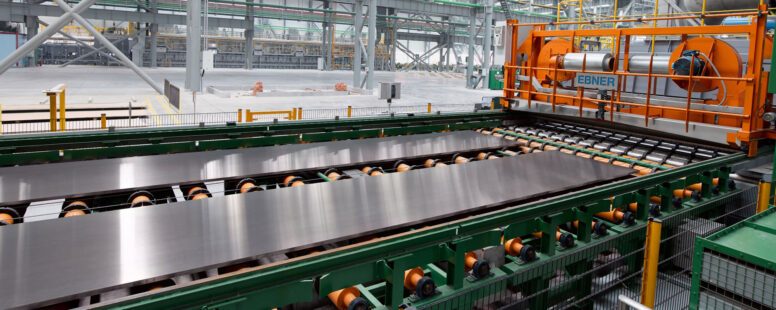
The next steps for aluminum heat treatment
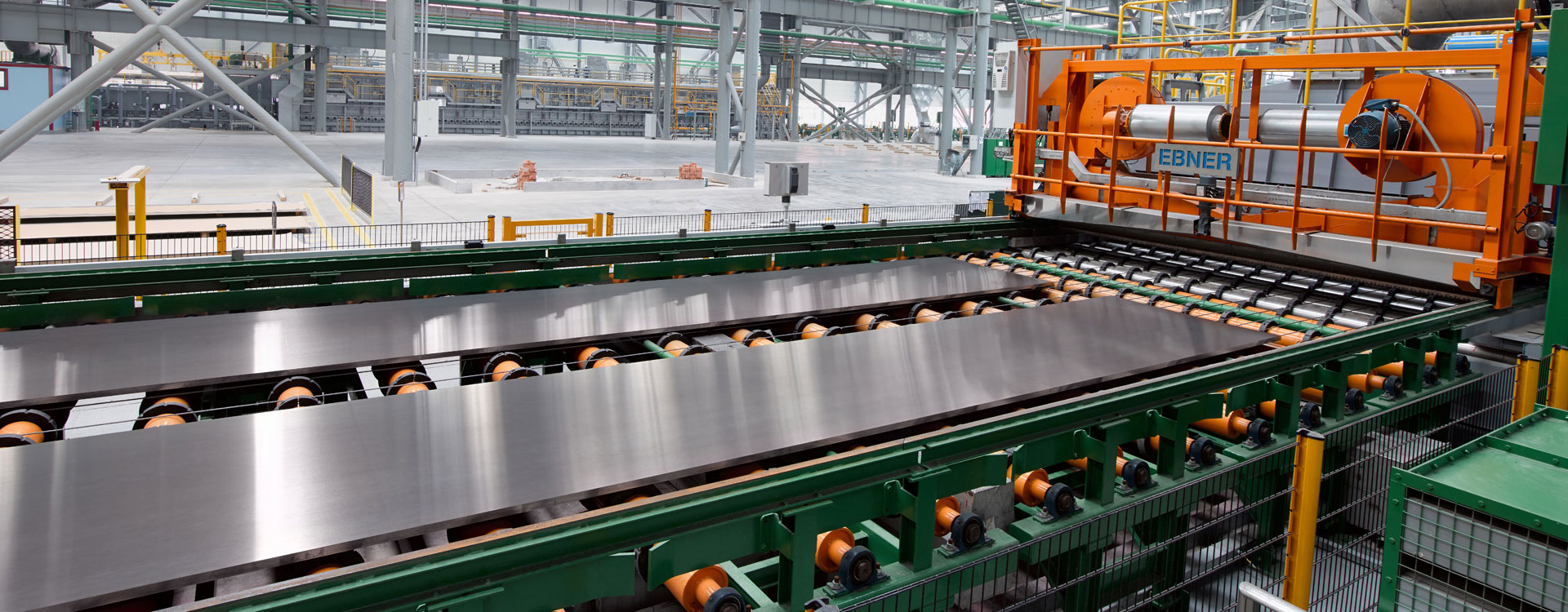
EBNER Industrieofenbau| Markus Gangl, Senior Product Manager Aluminium
Digital, sustainable and fit for the future.
The next steps for aluminum heat treatment.
The aluminum heat treatment industry is undergoing radical change: digital process modeling, the use of hydrogen as an energy vector and carbon-neutral manufacturing have become key trends. In the third of our series of interviews, Markus Gangl, Senior Product Manager Aluminum, explains how EBNER has already begun to shape this future.
EBNER offers digital process modeling through its VISUALFURNACES® and TREATperfect software. How do these systems support customers in their daily tasks?
The TREATperfect module is an intelligent calculation and optimization system for heat treatment processes. It provides a precise calculation of the material temperature, ensuring that the heat treatment process accurately follows the specifications. At a variety of furnace types, this often means that the classical approach of using thermocouples to take time and cost-intensive measurements of the material temperature can be eliminated.
Another central advantage provided by the model is process optimization, as unnecessary downtime for safety-related processes can be reduced or completely eliminated. The calculation model provides the exact temperature across the entire cross-section of the material, making it especially useful where a direct measurement of the material temperature isn’t possible – for example in continuous facilities or at homogenizing facilities for ingots, where only the surface temperature is measured. This significantly reduces or even fully eliminates the additional safety times required during the heating and soaking phases.
Furthermore, TREATperfect supports offline planning by calculating setpoints and heating times in advance. This decreases downtime and increases the reliability of scheduling. At the same time, this module optimizes the process online in real time, which leads to stable furnace parameters, more consistent product quality and a more efficient use of energy.
Overall, TREATperfect improves product quality, shortens process times, lowers costs and can be easily integrated into existing systems.
What role does automation play in production safety and efficiency?
Automation naturally increases both safety and efficiency. The high level of automation at our facilities minimizes the risk of operator error and work-related accidents. At the same time, automation ensures a consistently high process quality since the parameters are automatically monitored and adjusted. This results in shorter processing times and optimized energy usage.
Sustainability has become more important than ever. Which solutions does EBNER offer to enable carbon-neutral production?
We are proud to be able to offer every EBNER heat treatment facility for aluminum with an electric heating system, ensuring carbon neutrality at the local level. Furthermore, our ECOBURN H2 Flex burner allows certain types of furnaces to flexibly use either natural gas or hydrogen.
Another highlight in the area of sustainability is our newly developed HICON® plate heater. This is an innovative electric heating system for convection furnaces with high energy density and low pressure loss. Its versatility makes it ideal for converting existing facilities from gas to electric heating systems.
Can thermal energy recycling systems like heat recovery or recuperators significantly improve energy efficiency?
Yes, thermal energy recycling systems like heat recovery units and recuperators can substantially increase energy efficiency in industrial processes. The main advantage is that hot exhaust gases and thermal energy from the process are not released unused into the environment. Instead, they are used to preheat combustion air or other utilities. This drastically reduces primary energy consumption, resulting in a practical savings of between 10 and 30 % (depending on the baseline).
Our high-performance recuperators are distinguished by their exceptional combustion efficiency. Waste heat is reused in the process to the greatest extent possible, optimizing energy use. In addition, any remaining residual heat can be used for other processes within a plant – further increasing overall efficiency and creating other opportunities for savings.
The re-use of the waste heat produced during processing not only supports the reduction of primary energy requirements, but also makes a significant contribution to decarbonization and the achievement of ambitious sustainability goals.
There’s lots of talk about hydrogen as an energy source. How realistic is the idea that it will soon play a key role in furnace technology?
Hydrogen is often spoken of as the energy source of the future, and there’s a good reason for that. It is carbon-neutral when burned and could potentially replace fossil fuels at some point. However, using hydrogen to heat industrial furnaces is still viewed critically. The main reason is the limited availability of hydrogen, which makes widespread use difficult. Moreover, other energy-intensive processes in use throughout the industry would also require large quantities of hydrogen, further intensifying competition for this resource.
EBNER is well-prepared for this development, as we already have H₂ burners available for certain furnace types. This has laid a technical foundation for the use of hydrogen as a fuel as soon as an adequate supply chain has been established. The question still remains, though, whether hydrogen is actually a realistic alternative for heat treatment processes.
Finally, how will the heat treatment of aluminum develop in the next 10 – 15 years?
In the next 10 – 15 years, the heat treatment of aluminum will undergo major changes as it moves toward increased digitalization, energy efficiency and sustainability. The focus will be on more precise process control, the increased use of simulation and optimization tools and a transition to cleaner energy sources, as well as a consistent reduction in energy consumption and carbon emissions across the entire life cycle of the facility.
EBNER is not just prepared for these changes – we are actively involved in shaping them. We have been working for years on digital systems and intelligent modules that make processes fit for the future over the long term, thereby helping our customers meet their environmental and climate targets. Examples of these include solutions for data-based process optimization, increasing efficiency and switching to alternative energy sources. This results in heat treatment systems that not only meet the economic requirements of the industry, but increasingly demanding environmental targets as well.