


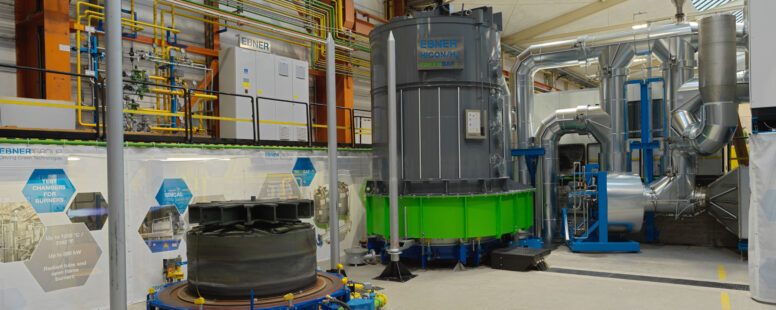
Zero-emission heat treatment
EBNER Industrieofenbau | Sascha Eppensteiner, Vice President Product Management
Zero-emission heat treatment: a step toward climate-neutral steel production?
The steel industry is facing fundamental change. In light of increasingly stringent environmental regulations, rising CO₂ certificate prices, and growing demands for sustainable production processes, decarbonization is becoming increasingly important along the entire value chain. Heat treatment, as an energy-intensive downstream process, is coming under particular scrutiny.
In the following interview, we talk to Sascha Eppensteiner, Vice President Product Management, about the role of emission-free technologies such as electric direct heating and intelligent heat recovery systems – with a special focus on GREENBAFx®, an innovative solution for emission-free heat treatment.
Why is zero-emission heat treatment increasingly important to the steel industry?
The emissions limits established by environmental protection regulations are constantly becoming stricter. A particular focus is being placed on CO₂, NOx and particulates.
In addition to this, emissions trading (trade in CO₂ certificates) is expanding within the EU. This increases the cost of processes that create emissions.
The steel industry is thus being challenged to drastically reduce emissions.
In comparison to traditional gas burners, what role do electric heating systems play?
Electric heating systems play an important role in decarbonization. As there is no combustion, there are no exhaust products like CO2 or NOx.
An electric system also means that no heat is lost through stack gases, leading to a higher overall efficiency than with a gas-fired system.
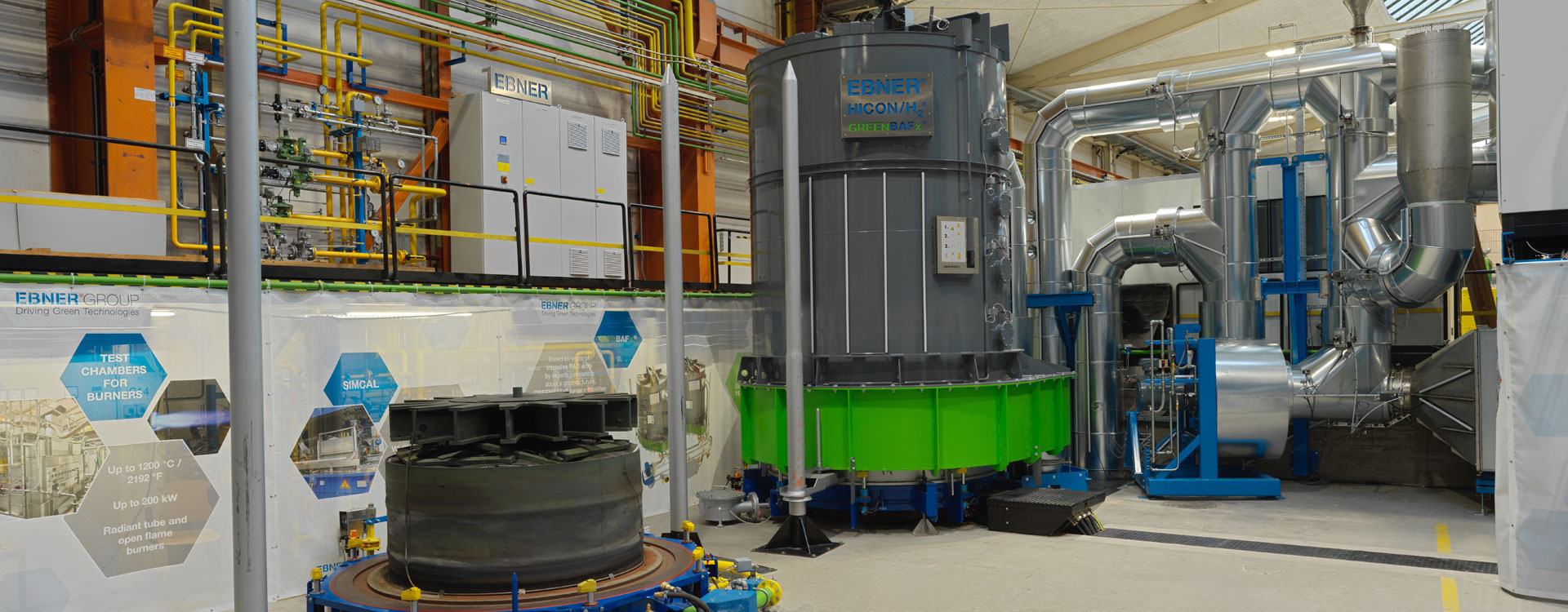
These aspects are particularly apparent in the direct electric heating system of a GREENBAFx®. At a GREENBAFx®, the heating system is installed within the encapsulated process chamber. Energy is transferred directly to the atmosphere, rather than indirectly as it is in a traditional heating bell/inner cover system.
How does the recovery of thermal energy help to achieve environmental goals?
Energy recovery is an amazing tool for improving the energy efficiency of a facility and reducing both emissions and the consumption of natural resources.
However, it is important to design the recovery system in such a way that as much “high-quality” energy (i.e. heat at a high temperature) as possible can be recovered. Ideally, this is then used in the own process.
What developments allow a GREENBAFx® to provide energy savings of
up to 30 %?
At a GREENBAFx® we re-use recovered energy in the facility’s own process. We refer to that as heat exchange.
The cooling air used to cool a charge heats up significantly. Previously, this energy was simply expelled without re-using it. Now, we re-use this heat by transporting it to another workbase, where it is used to pre-heat the cold charge.
Does zero-emission technology affect existing production processes or the quality of the steel?
Neither upstream nor downstream production processes are affected by this technology. The metallurgical quality of the steel is also unaffected.
While heat exchange does mean that cooling and heating up (preheating) rates are gentler, this can have a positive effect on lubricant evaporation and the prevention of stickers.
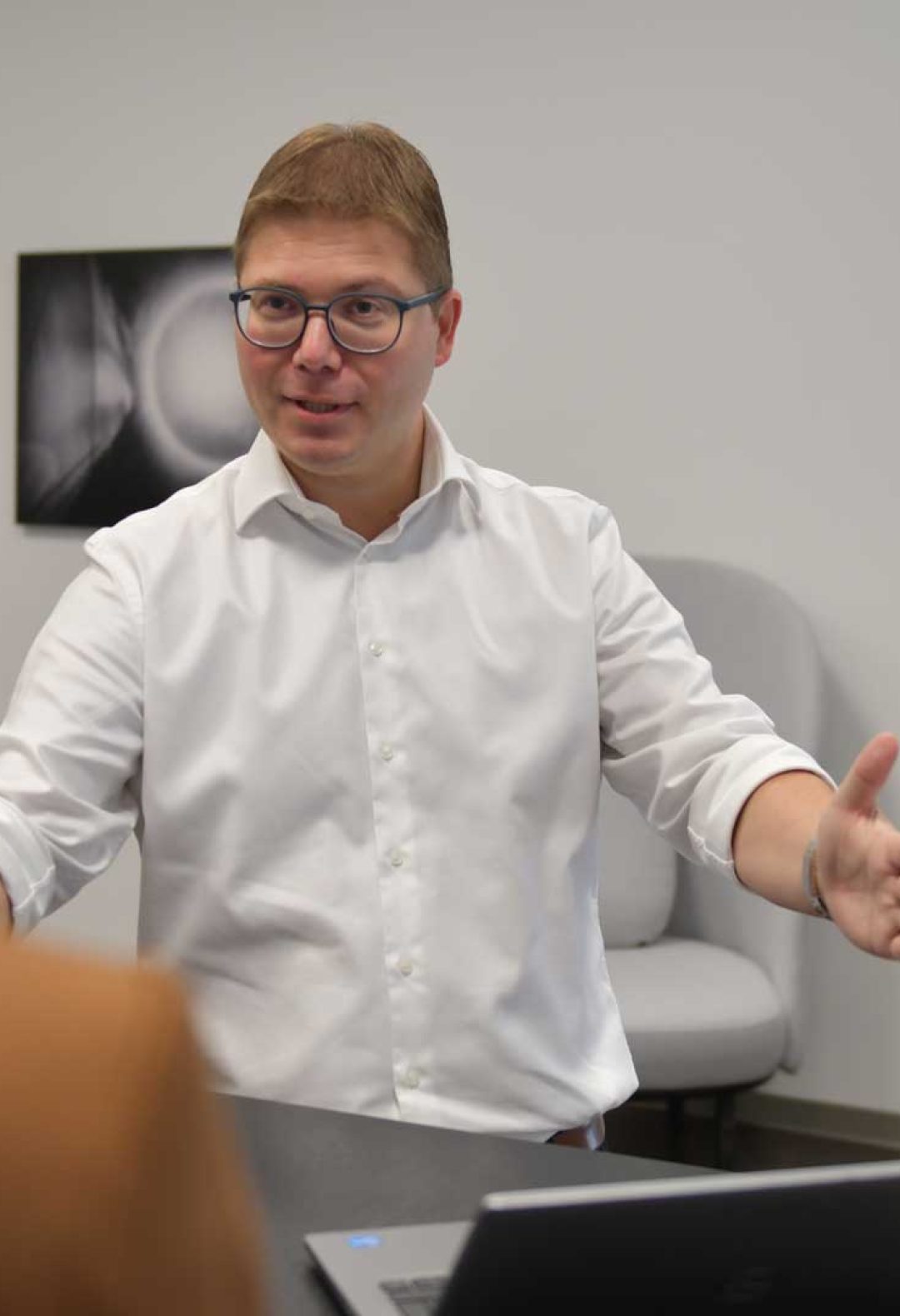
Sascha Eppensteiner, Vice President Product Management
What kinds of environmental regulations do steel manufacturers have to comply with?
These vary throughout the world.
However, steel manufacturers are generally under significant regulatory pressure. Environmental legislation is strongly oriented on climate targets, with a particular focus placed on CO2, NOx and particulates.
How can a GREENBAFx® aid companies in meeting future CO2 emissions standards, either in the EU or in other markets?
A GREENBAFx® is an important element in decarbonizing downstream processes, as the facility has zero emissions.
In terms of emissions certificates and subsidies, what advantages does a GREENBAFx® provide?
In carbon-intensive industries, as for example steel manufacturing, emissions certificates are cost drivers. Heat treatment at a GREENBAFx® facility emits no CO2, and it follows that significantly fewer certificates are required for the overall process. Ideally, the electric heating system would be powered with green electricity.
Due to its high energy efficiency and lack of emissions, a GREENBAFx® often qualifies for subsidies. Many nations have programs that subsidize investments in climate-friendly production equipment.
How much interest does the industry have in zero-emission heat treatment processes?
There is a great deal of interest. Particularly in the processes used for steel production, in which the most leverage can be found, major investment drives have already begun.
Additional steps are seeing the decarbonization of many “downstream” processes, such as heat treatment, both to comply with environmental regulations and to fulfill the market demand for “green” steel.
Are there any challenges to face when switching from conventional to zero-emission processes?
Yes – changing from conventional, gas-fired processes to a zero-emission approach brings many technical, commercial and infrastructure-related challenges, particularly at heat treatment facilities.
From a technical point of view, the required power density must be provided. It is difficult for standard electric heating system designs to provide the same output densities as gas-fired heating systems, particularly when high temperatures are required.
On the commercial side the level of investment that is required can be challenging, as it tends to be capital-intensive. Renewable energies also tend to be more expensive than fossil fuels. This underlines the importance of thinking ahead when making such an investment, and of investing in systems that keep future operating costs low.
The challenges associated with infrastructure should also not be ignored. The electrification of the processes requires high connected loads, meaning that investments in power supplies must also be made.
Do you believe that the steel industry will be able to switch over to zero-emission production in the next few decades?
For the steel industry, complete freedom from emissions is an ambitious goal. Over the long term, it may be possible to achieve.
Personally, I think that it is more realistic to expect the steel industry to significantly reduce carbon emissions over the next 20 years or so. There will, however, be a few pioneers that achieve zero-emission production somewhat earlier.